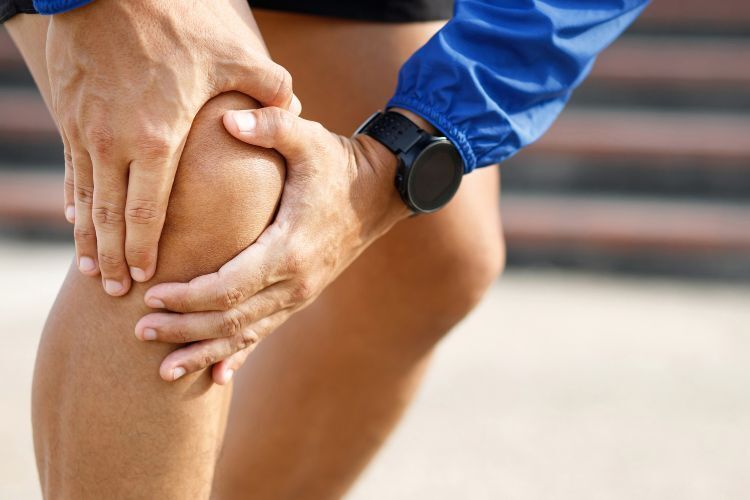
You lace up your shoes, step outside, and feel it again. That dull ache right below your kneecap. Runner's knee doesn't just hurt. It keeps you from the one thing that clears your head.
If you've been dealing with runner's knee and wondering whether there's a way to get back to running without just waiting it out, chiropractic care may be exactly what's been missing from your recovery plan. At Community Chiropractic in Fulton, NY, Dr. Patrick Nicholson has helped patients work through the kind of persistent knee pain that doesn't respond to rest alone.
Here's what runner's knee actually is, why it sticks around, and how chiropractic care addresses the problem at its source.
What Is Runner's Knee?
Runner's knee is the common name for patellofemoral pain syndrome, which is pain that develops around or behind the kneecap, usually brought on by repetitive motion like running, hiking, cycling, or even going up and down stairs. It's one of the most common overuse injuries among active people, and it tends to be stubborn.
The discomfort often feels like a dull, aching pressure under the kneecap that gets worse after sitting for long periods, squatting, or coming downhill. Some people describe a grinding or creaking sensation with movement. Others notice the pain builds gradually over a few weeks until it's impossible to ignore.
What makes runner's knee frustrating is that rest often only provides temporary relief. Once you return to activity, the pain comes back. That's because rest doesn't fix the underlying mechanics driving the problem in the first place.
Why Runner's Knee Is Rarely Just a Knee Problem
This is the part most people don't hear: runner's knee is almost always a whole-body alignment issue, not an isolated knee problem.
The kneecap doesn't move on its own. It tracks within a groove on the femur, guided by the pull of surrounding muscles and the alignment of the joints above and below it. When something is off, whether that's tight hip flexors, weak glutes, a pelvis that's slightly tilted, or feet that overpronate, the kneecap gets pulled out of its proper tracking path. Over thousands of steps, that misalignment creates friction and inflammation in the joint.
This is why a chiropractor can be so effective for runner's knee, even though people often think of chiropractic care as something exclusively for the back. The spine and pelvis directly influence how your hips, knees, and feet function. Spinal misalignments, sometimes called subluxations, can alter gait mechanics and create compensatory patterns that load the knee unevenly.
Addressing that root cause is very different from treating the symptom.
How Dr. Nicholson Approaches Runner's Knee
At Community Chiropractic in Fulton, the approach to knee pain starts with a full assessment of how your whole kinetic chain is functioning. Rather than focusing only on the knee itself, Dr. Nicholson evaluates spinal alignment, hip mobility, and movement patterns to identify where the breakdown is coming from.
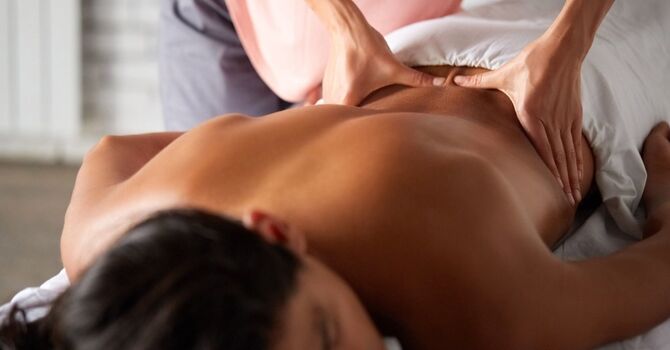
Adjustments and alignment correction form the core of care. Using the Activator Method, a gentle, instrument-assisted technique that produces no cracking or twisting, Dr. Nicholson restores proper alignment to the spine and pelvis. When the pelvis sits level and the spine is in proper alignment, the hip and knee joints below have a much better chance of moving the way they're supposed to.
For patients with runner's knee, this often means addressing the lumbar spine and sacroiliac joints, areas that directly influence how force travels down through the hip and knee with each stride.
In addition to in-office adjustments, Community Chiropractic provides patients with guided exercise videos to support their recovery between visits. Targeted movement work for the hips and surrounding musculature helps reinforce the alignment corrections made during care and builds the strength needed to protect the knee going forward.
What to Expect During Recovery
One of the most common questions people have is: how long will this take? Honestly, it depends on how long the pattern has been in place and how consistently someone engages with their care plan. Many patients begin noticing improvement within the first few visits. Others, especially those who've had runner's knee for months, take longer to see consistent results.
What tends to make the biggest difference is not just the adjustments themselves but the in-between work. The joints need to relearn proper movement patterns, and that takes repetition. Patients who use the guided exercises provided by Dr. Nicholson between appointments tend to progress faster and maintain their results longer.
The goal is never just to reduce pain enough to get back out there. The goal is to resolve the underlying mechanics so runner's knee doesn't come back the next training cycle.
You Don't Have to Keep Sitting Out
Runner's knee is one of those injuries that can make the whole sport feel fragile. Every flare-up raises the question of whether running is sustainable long-term. The good news is that for most people, it absolutely is when the root cause is identified and addressed properly.
If you're an active person in Fulton or anywhere in Oswego County who's been sidelined by knee pain, an assessment with Dr. Nicholson is a worthwhile next step. Community Chiropractic has been caring for families and active patients in the area since 1998, and knee pain care is part of what the practice does well.
You can reach Community Chiropractic at (315) 592-4740, or book directly at comchiro.janeapp.com. The sooner the mechanics are addressed, the sooner you're back on the road.
.jpg)